Turns out, philosophy is pretty good training for software engineering
April 21, 2026
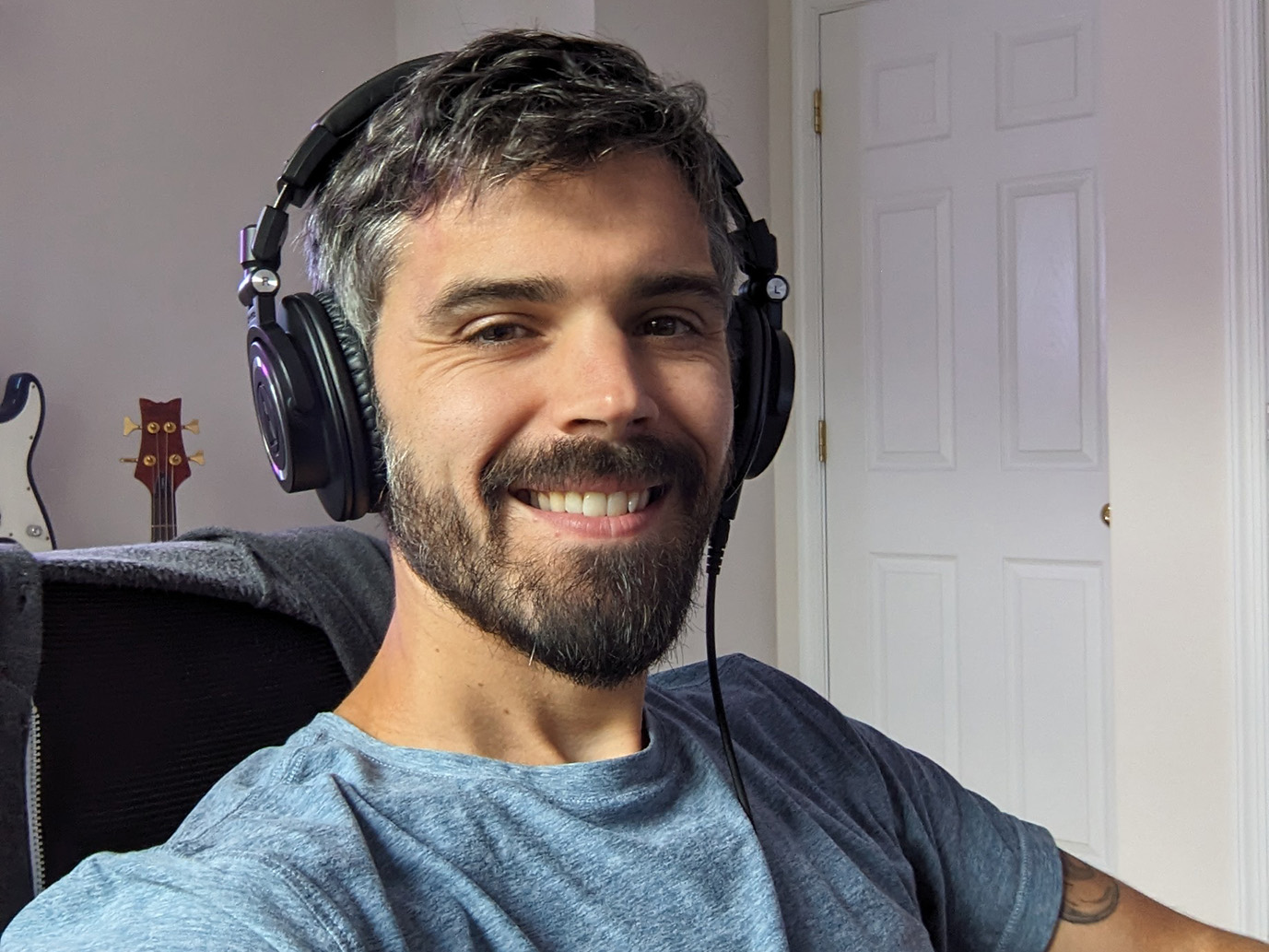
When a middle person is needed to bridge the communication gap between customers and a team of software engineers, Sean Burns (B.A.’13) leans on a background that sometimes surprises his peers: his philosophy degree. A software engineer at Flowhub, and previously at organizations like Discovery Education and Capital One, Burns has mastered the soft skill of tailoring concise communication for folks ranging from the tech-obsessed to the nontechnical.
Burns leans on his coursework steeped in analytical thinking and curiosity from VCU’s Department of Philosophy in his professional life to create a welcoming and productive working environment which fosters positive development for new and current engineers.
What did you choose to study philosophy?
When I got to VCU, I was actually undecided on my major. Coming out of high school, I had an interest in computer science, a love of writing, and an open mind for what I might find interesting. I think early on, I was trying to balance a desire for what I wanted to study with the (incorrect) belief that I should study something practical for better job security.
In my second semester, I took an ethics class with Mikhail Valdman, Ph.D., as it would constitute an elective if I pursued a computer science degree, and was fascinated by the applied reasoning that analytic philosophy demanded. That interest led me into another philosophy elective, and then I knew I wanted to dive as deep into the subject as I could.
Was there a faculty member who made a particular impact on your education and/or career journey? How so?
It was in my second philosophy elective, PHIL 101: Introduction to Philosophy, that Donald Smith, Ph.D., managed to convince me to pursue philosophy as my major. He told the class, roughly, “You’ve got 40 years of work ahead of you and only four years of college. This is the only time you have complete control over how your energy is spent, so spend it on something you love.” That was the spark that lit the kindling for my passion for philosophy.
In my time going through school, I made some of the longest-lasting friendships in my life, and developed skills that have set me apart from my peers in the software engineering field throughout my career. I absolutely give credit to Dr. Smith for that.
Tell me about your current role as a staff software engineer at Flowhub. What does your day-to-day look like?
In my current role, I spend most of my day trying to define solutions to problems facing our customers, and trying to translate those solutions into working software. This means having conversations with my team members or directly with our customers to understand what is missing in the software and how I can fill that gap. Once I have a desired end-state clearly understood and agreed to by the rest of our team, and we all agree that it will be the best solution for our customers, I implement that as code. This usually involves a lot of time staring at the existing code base and trying to balance how to add a new feature in such a way that existing features don’t break, and in such a way that it will be easy to change, or add newer features to in the future.
Along the way, I’m also responsible for reviewing and critiquing the work of my peers, offering feedback and suggestions to help them grow and develop habits that will serve them as they progress in their careers. Or I might be drafting documentation to communicate my ideas and solutions to the rest of the engineering department to enable other engineers to change or fix my code in the future, or to teach techniques and principles which will help the organization better standardize our practices and operate with less friction.
Depending on the week, each day can be any combination of all of those responsibilities. It’s a challenging and stimulating role in a fascinating field.
How did the curriculum in the Department of Philosophy prepare you for your professional work?
Whenever anyone asks me what my secret is, my answer is always, “my philosophy degree.” My technical problem solving skills strongly benefit from the foundation in logical analysis which is at the core of analytic philosophy. And on top of that, the kind of critical thinking and rigorous writing that is taught throughout the program has made me one of the most effective resources on any team I’ve been on for establishing a coherent, shared understanding among the team.
When there is a need for clear communication of technical problems or solutions to a non-technical audience, I am always the go-to resource. It’s a soft skill that was never directly addressed as part of my computer science curriculum, and that has helped me stand out among my peers who do not share my philosophy background.
What’s your why?
As I’ve gotten older and progressed in my career, my “why” has changed considerably, and the answer changes for different facets of my life. Professionally, my “why” used to be about being the best/highest-impact engineer in any team I’m on, contributing to a company whose mission I believe in. But now, my “why” is that I want to cultivate the best environment for newer engineers to become the best professional versions of themselves that they are capable of. Creating healthy, productive spaces for the people around me is really important to me; I want to set others up for the highest chance of success.
Personally, my “why” is and always will be to make the lives of the folks I love better in whatever ways I can.